From the sourcing desk
Private Label Squishy Toys: What Changes Without New Tooling
What a growing brand can actually change on an existing squishy — label, sleeve, insert, color box — plus an approval tree for 120–600-piece runs.
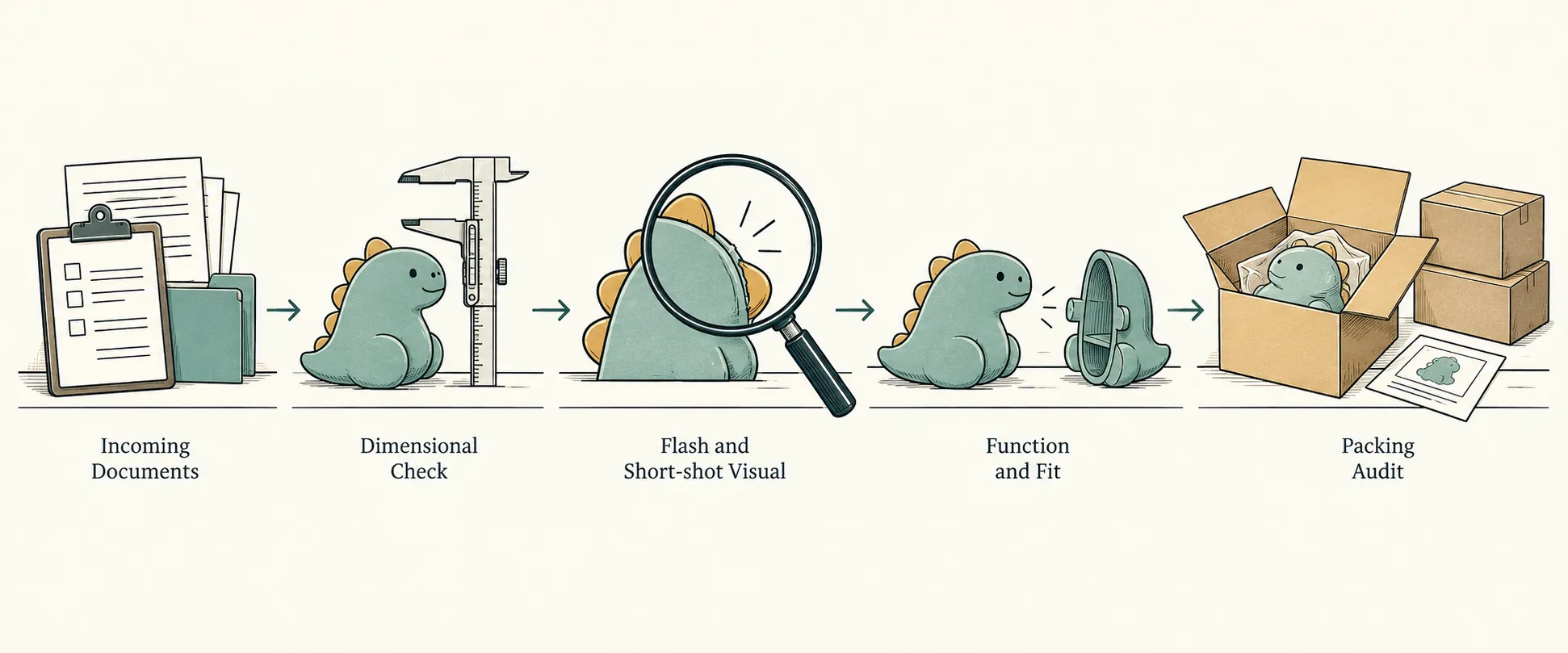
On an existing squishy platform, you can change the brand label, hang tag or card, printed sleeve, color box and pack insert without touching the mold — and that is usually the whole scope of a 120–600-piece private label run. What you cannot change without new tooling is the molded shape, the base material and the core dimensions. The practical decision is therefore not "can I private label this squishy" but "which of my changes stay inside the supplier's existing platform, and which quietly turn my order into a tooling project."
This matters because private label products are commonly sourced through ODM manufacturers who already own the product design, and ODM customization is generally limited to predefined modification options rather than open design control OEM vs ODM: Differences, Benefits & How to Choose. Existing tooling may support the project and lower the first spend, but that is stated as a possibility, not a guarantee. Treat every cosmetic change as something to confirm against the specific SKU, not as a default right.
Which changes are packaging-level, and which are tooling-level?
Sort your wish list into two columns before you contact anyone. Packaging-level changes ride on the same molded part: a brand label applied to the unit or bag, a printed card or hang tag, a paper or film sleeve around the existing shape, a color box, and an insert card with your brand story or care text. Tooling-level changes alter the part itself: a new silhouette, a different size, a new mold texture, a changed base material, or a mechanism that did not exist on the platform.
The line is not always obvious. Changing the color of a molded part can be a material-and-pigment decision rather than a new mold, but it still has to be validated on the actual grade and mold surface — finish, texture and color behave differently across materials, and a color that looks right on a swatch can read differently on a soft, matte surface. A supplier listing for a TPR squishy, for example, advertises that color changes are possible and that custom orders are handled, which shows color is often treated as a modification rather than a redesign — but that is one supplier's listing, not a rule for the category.
So the working rule is: if the change touches the molded part, ask whether it is a modification inside the existing platform or a new tool. If it touches only what wraps, labels or accompanies the part, it is packaging-level until the supplier tells you otherwise.
The buyer approval tree for a 120–600-piece private label run
Work down this tree in order. Each step is a gate: if the answer is no, you stop and either narrow the change or accept a larger project.
Step 1 — Is the base SKU eligible for private label at all? Some platforms are sold as-is with no branding option, and some suppliers reserve customization for larger volumes. Confirm eligibility in writing before you design anything.
Step 2 — Is your change packaging-level or tooling-level? If packaging-level, continue. If tooling-level, you are now in a development project with its own cost and timeline, and the 120–600-piece framing no longer applies.
Step 3 — Does the packaging change require a new print plate, die or artwork approval? A label or insert usually needs artwork sign-off; a color box may need a dieline and a print proof. Ask what the supplier needs from you and in what format.
Step 4 — Does the change affect any safety marking, age warning or compliance label? If yes, the artwork must be reviewed against the SKU's existing warnings, not against a generic template.
Step 5 — Is the quantity inside the supplier's stated minimum for that specific change? This is where small runs most often fail. A supplier listing for a PU squishy toy shows custom logo and custom packaging each at a 100,000-piece minimum, with graphic customization at 500,000 pieces — supplier-stated listing terms, not verified contract terms, but a clear signal that branding minimums can sit far above a 120–600-piece trial.
Step 6 — Approve a physical pre-production sample of the finished pack before the run. Approve the sample, not the PDF.
The eligibility caveat: 120–600 pieces is a narrow lane
Small private label runs work when the change is light and the platform already exists. They stop working the moment you need a new print plate, a new mold, or a branding minimum the supplier sets above your order size. The honest position is that 120–600 pieces per SKU is realistic for eligible products and packaging projects only — actual catalog minimum order quantity and carton pack govern each SKU, and consolidation across SKUs does not reduce an individual SKU's minimum. Mixed retail sets and repacking need separate approval.
Two practical consequences follow. First, do not assume a carton quantity is an order multiple; a carton pack tells you how the goods ship, not how you must buy, unless the supplier explicitly restricts orders to full cartons. Second, if your branding minimum exceeds your trial size, your options are to run the trial unbranded, to move the branding to a lower-minimum format such as a label or insert, or to wait and order at the supplier's stated minimum. Pick one deliberately rather than discovering the gap at deposit stage.
One more caveat that has nothing to do with tooling: a squishy that contains water beads is a different risk class from a solid PU or TPR squishy. US recalls in 2026 and 2027 covered squishy toys whose internal water beads expanded beyond the permitted size, posing ingestion, choking and intestinal obstruction hazards CPSC recall 26-786 and CPSC recall 27-003. If your private label plan includes a bead-filled squishy, the bead construction is a spec decision, not a packaging decision, and it sits outside the no-new-tooling lane.
Change types and what they typically require
| Brand label on unit or bag | Packaging-level; artwork approval and a physical sample; confirm the supplier's minimum for that format |
|---|---|
| Hang tag or printed card | Packaging-level; artwork and card stock approval; confirm whether it is applied in-line or packed loose |
| Printed sleeve | Packaging-level; may need a dieline and print proof; confirm minimum and whether the sleeve is stocked or made to order |
| Color box | Packaging-level but heavier; expect dieline, print proof and a higher minimum than a label |
| Pack insert card | Packaging-level; lowest-friction branding option; confirm it does not obscure required warnings |
| Molded color change | Material-and-pigment decision; must be validated on the actual grade and mold surface; confirm whether it counts as a modification or a new tool |
| New shape, size or mold texture | Tooling-level; new mold and development timeline; outside the 120–600-piece no-tooling scope |
| Base material change | Tooling-level in practice; affects feel, finish and testing scope; treat as a new development |
| Water-bead or gel filling | Construction-level; separate safety and testing considerations; not a packaging change |
How to run the trial and decide on a reorder
A private label trial is only useful if you define the observation before you place the order. Pick the placement, the number of units offered, the observation window and the sell-through threshold in advance, then compare actual units sold against the threshold at the end of the window.
Illustrative example — numbers are hypothetical and are not a forecast: you place 300 units of a branded squishy, offer 120 of them on a single listing for 30 days, and sell 54. That is 45% sell-through on the offered units over the window. If your pre-set reorder threshold was 40%, you reorder; if it was 60%, you do not, and you either adjust the placement or drop the SKU. The point is not the number — it is that the threshold is set before the data arrives, so the decision is not made by hindsight.
Two cautions on reading the result. A single listing's sell-through is one channel's observation, not a market trend; do not generalize it to the category. And a low sell-through on a branded pack does not by itself tell you whether the problem was the product, the price or the artwork — if you want to separate those, run the same base SKU unbranded alongside it, or change one variable at a time.
Buyer questions on private label squishy toys
Can I change the color of an existing squishy without a new mold?
Often yes, but confirm it with the specific supplier and SKU. Color is usually treated as a modification inside the existing platform rather than a redesign, but it still has to be validated on the actual material grade and mold surface, and the supplier may classify it differently.
Why do some suppliers quote a 100,000-piece minimum for a logo?
Branding minimums are set by the supplier and can sit far above a trial order size. A fetched supplier listing for a PU squishy toy shows custom logo and custom packaging each at a 100,000-piece minimum, with graphic customization at 500,000 pieces. Those are listing terms, not verified contract terms, but they show why a 120–600-piece branded run may not be accepted as-is.
Does ordering several SKUs together lower the minimum?
Consolidation does not reduce an individual SKU's minimum. Each SKU carries its own minimum order quantity and carton pack, and mixed retail sets or repacking need separate approval.
Do I need new safety testing if I only change the packaging?
That depends on the change and the market. A packaging change can affect required warnings, age markings and compliance labels, so the artwork must be checked against the SKU's existing warnings rather than a generic template. Ask the supplier what documentation the change triggers before you approve the artwork.
Is a carton quantity the same as an order multiple?
No. A carton quantity describes how the goods ship. Unless the supplier explicitly restricts orders to full cartons, it is not an order multiple.
Sources
Next step
If you already have a base squishy in mind, the fastest way to find out whether your branding idea fits the no-new-tooling lane is to send the change list — label, card, sleeve, box or insert — and ask which of them are eligible on that SKU and at what minimum. Start with the private label scope check before you commission artwork.