Two minimums, one launch budget
A private label project usually has at least two quantity constraints: the minimum the toy supplier accepts and the minimum the packaging supplier will print. They are not necessarily the same. A product that can be ordered in 240 pieces may still need a larger box print run. Ask for both numbers in the first quote, plus the quantity of unused packaging you would own afterward.
Start with the existing product
For a first launch, choose an existing SKU and approve its sample before discussing a mold or material change. Write down the dimensions, texture, color assortment, intended age range and selling market. Customizing a package does not establish that the product is suitable for your audience. Safety requirements and market documents need a separate review.
Worked brief: three SKUs, one brand look
Imagine a first range with three eligible SKUs at 240 units each. Start by checking each toy MOQ and the printer’s minimum. Ask for two quotes: a shared sleeve design with individual SKU labels, and three separate printed boxes. Compare setup, unit packaging, assembly and unused print stock. A shared design only works if the packs fit and the required product information remains correct. This is an illustrative brief, not a promise that every catalog SKU can be ordered at 240 units.
Compare three realistic packaging routes
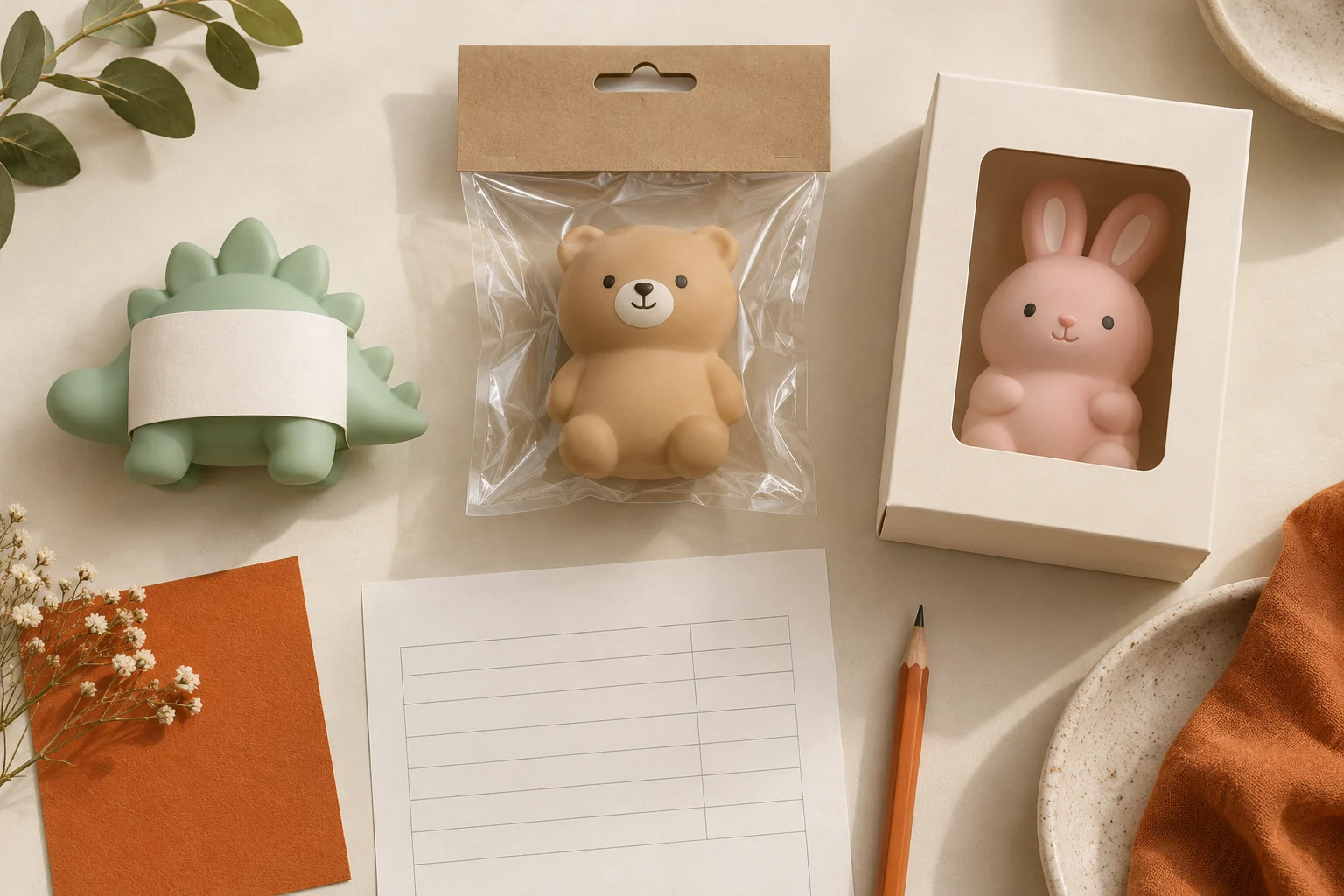
Request estimates for a branded label on a suitable existing pack, a printed sleeve or header card, and a fully printed box. For each, compare setup, unit cost, assembly and resulting carton volume. A shared box across several SKUs can help only when the products fit and the correct SKU information can still be shown. Do not assume that a shared design means a shared minimum.
Treat 120-600 pieces as a conversation starter
For eligible items, 120-600 pieces per SKU can be a useful target for private label squishies with low MOQ. Actual product records may show a higher quantity. A supplier can also require full carton multiples or a fixed color assortment. Have the sourcing desk quote the exact proposed combination rather than replacing the recorded minimum with a site-wide number.
Approve the product and package together
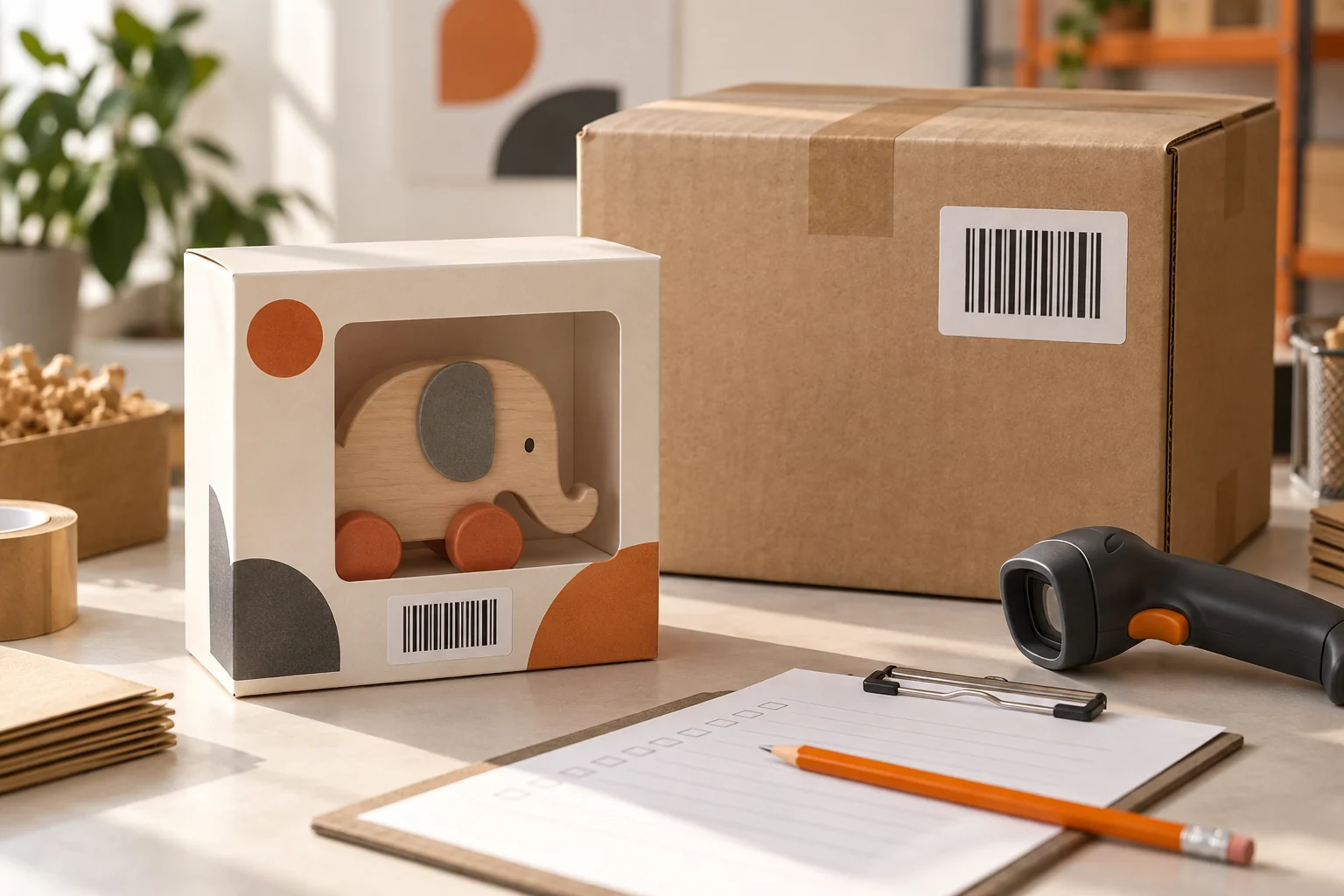
A digital proof can show your typography and color placement, but it cannot confirm box fit, closure strength or label adhesion. Review a physical sample when the packaging change warrants it. Check that warnings, traceability information and barcodes are readable on the final surface. Store the approval with the artwork version and product SKU.
Budget for the complete first order
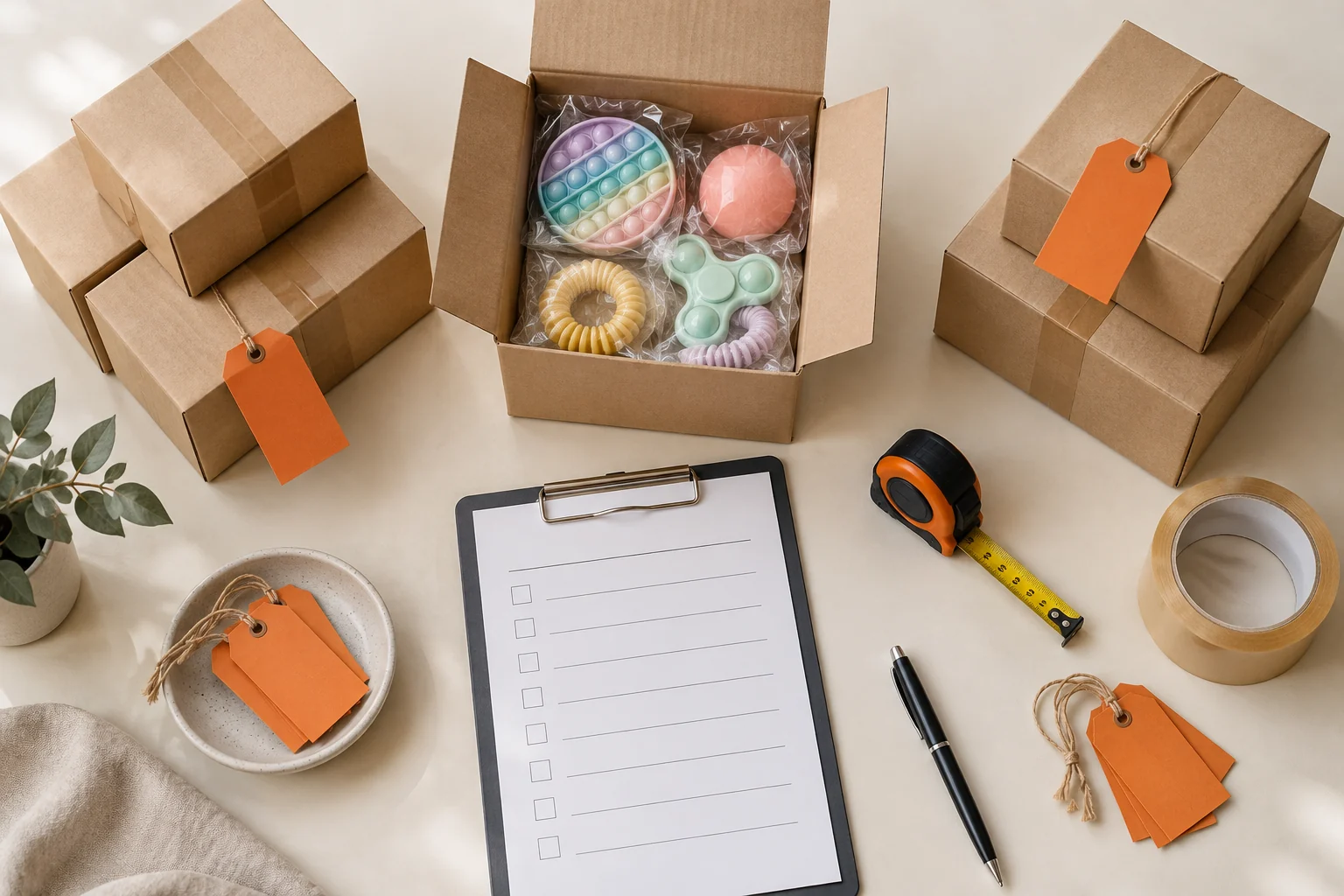
Add the product, setup, printed packaging, assembly, inspection, domestic collection and freight. Ask which costs repeat and which apply only to the first run. For unused printed stock, agree ownership, storage period, storage fees and disposal terms. A cheap first box is not a saving if the remaining print run becomes obsolete after a packaging change.
Your working checklist
- Per-SKU quantity and carton multiple
- Product sample and packaging sample
- Artwork version, label files and proof approval
- Print minimum, setup and leftover-packaging terms
- Inspection scope and final shipping estimate
Plan your private label packaging ↗
Planning guidance for B2B sourcing. Product requirements, costs and schedules must be confirmed for the actual order and destination.